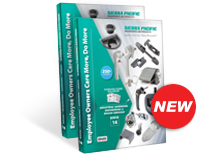

Spep Patent Archives
Constant innovation is critical for us to effectively support our customers in an ever-changing world. Our design engineers continually enhance existing designs and develop new proprietary designs to stay one step ahead of the competition.
UL Rated Hardware
LEARN MORE

100% Employee Owned
Sierra Pacific Engineering and Products (SPEP) is a 100% employee owned company. Our entire team is heavily invested in the company’s success, which creates a culture focused on surpassing customer expectations.
LEARN MORE
World Class Supply Chain Experts
EXPLORE PRODUCTS
Custom Hardware Design & Engineering
Sometimes the part needed for your particular application does not exist yet. Our team of design engineering experts will work with you to design, prototype, and manufacture the custom hardware you need.
LEARN MORE
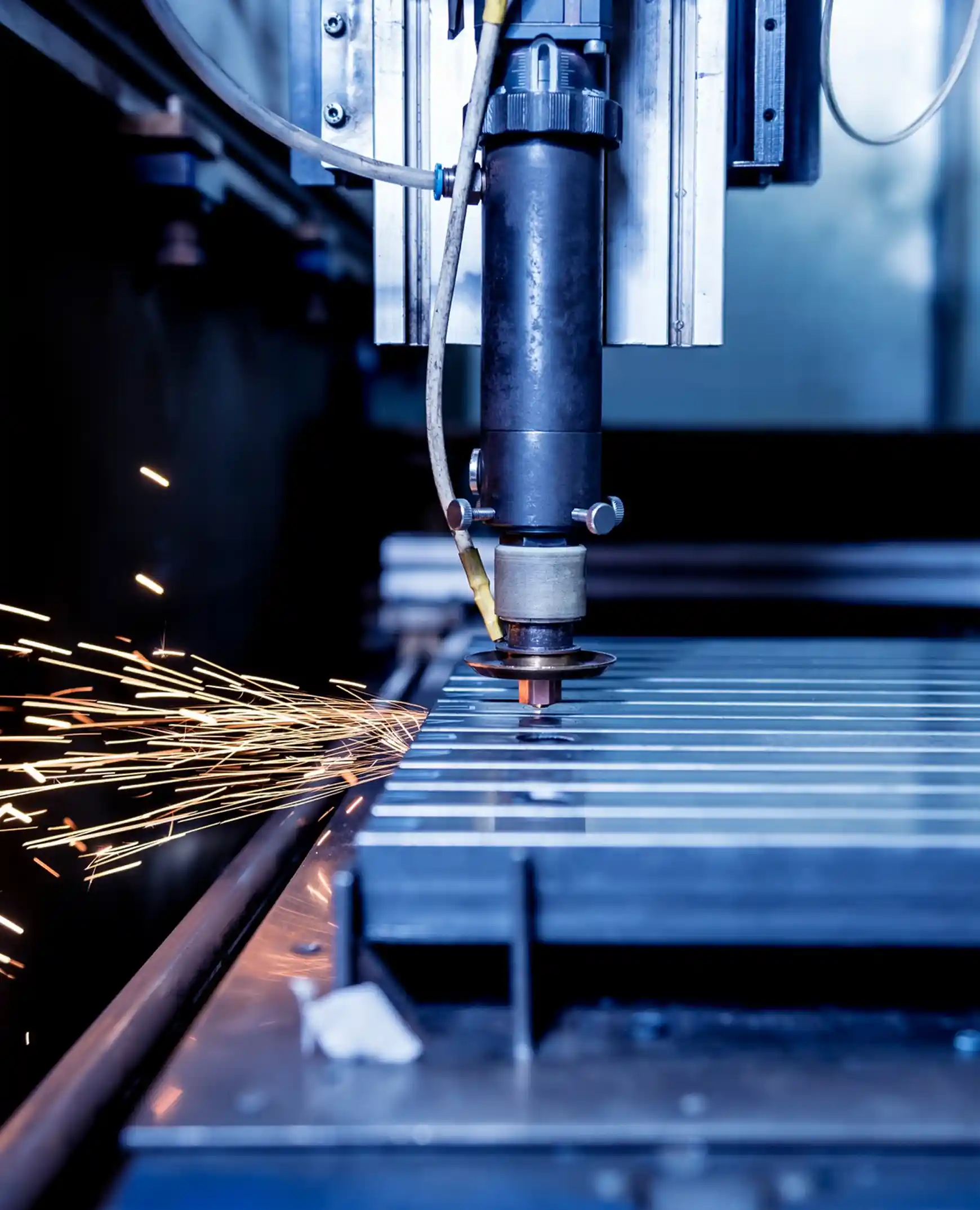
What Sets Our Industrial Hardware Apart
At SPEP, safety and compliance are just as important as offering the latest, innovative products. Compared to the competition, our hardware stands out for:
- Always certified: All of our hardware options include UL listed conduit hole seals and UL recognized parts for maximum safety.
- 80+ patents: Our dedication to innovation is reflected in our extensive patent portfolio, showcasing our ability to develop unique and effective hardware solutions.
- Custom Solutions: Designed to serve you with advanced tools like SolidWorks 3D CAD and FEA simulations, we offer custom options for 10,000+ parts.
- Rapid Prototyping: The latest 3D printing technology allows us to design new iterations with ease, reducing the time from factory to market.
- Robust Quality Assurance: Through stringent checks and quality control measures, including in-house testing and ISO 9001 certification, we always meet durability and reliability standards.
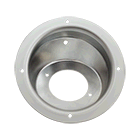
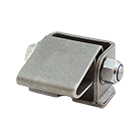
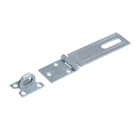
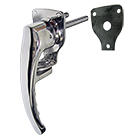
Featured Products
Discover the SPEP Difference

100% Employee Owned
Vested Interest in Customer Satisfaction Motivates Teamwork

Design Engineering
Detail-Oriented Problem Solvers & Application Experts

Future Thinking
Focus on Long Term Business Relationships & Innovation

Customer Focus
Exceptional Service Provided Above & Beyond Expectations

Supply Chain Experts
Inventory Management & Local Stock to Mitigate Lead Times

Flexible Requirements
Easy to Work With & Adaptive Methods of Doing Business
Success Stories

Terrific Vendor
Nice Work